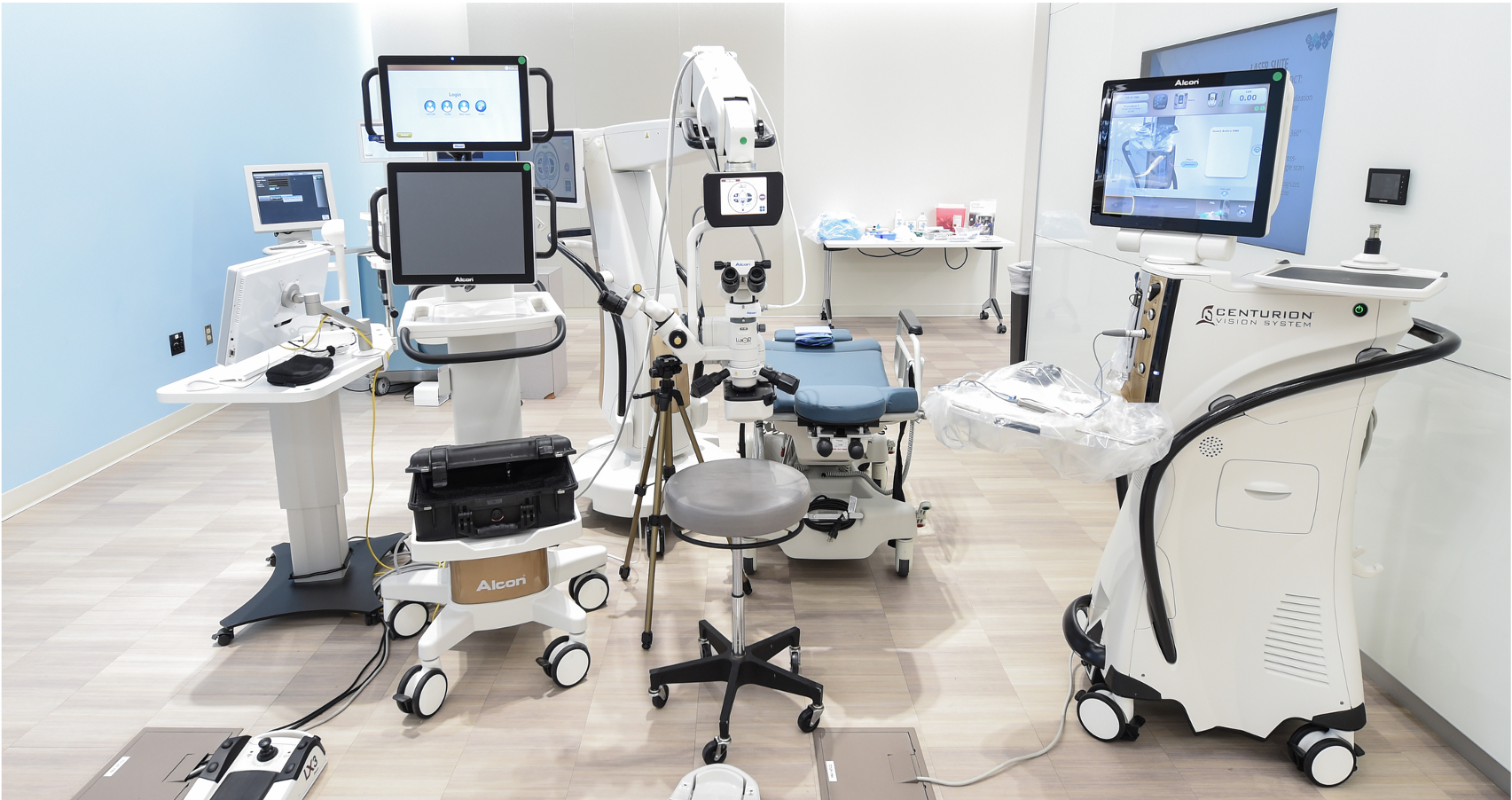
Alcon Vision Suite
They came back five years after to refresh the map.
A clear signal that work has lasting value is a client who returns to you. For five years we worked with Alcon on their next-generation surgical suite (NGSS) after building the North Star vision. Eventually, they came back to have us redraw it because the ecosystem it described had transformed around it. That return is an outcome I point to most often when talking about the value of service design.
$2M +
revenue
8
projects
5+
years
28+
contributors
Client: Alcon
Year: 2017 - 2022
Project Type: Service Design, UX/UI Design, Experience Design
My role: Project director guiding design team and leading end-to-end engagement across research, journey mapping, co-design workshops, and experience strategy. Over a 5 year period I led and oversaw 8 engagements spanning 6 design disciplines and 28+ contributors over 5 locations from the Philips global design function.
The Challenge
How might we envision an ecosystem of eye-care devices while developing and de-risking new technologies?
Starting from a fragmented experience and device landscape, Alcon came to Philips’ Design team to help envision and design their E2E next-generation “Unity” surgical suite ecosystem. Data from diagnostic devices were disconnected, new R&D efforts were underway, and they had limited internal design resources.
The Approach
Given significant changes inside and outside Alcon since the original 2017 NGSS vision was defined, we needed to validate the relevance of the ecosystem and determine the viability and technical requirements of the system.
We conducted rapid, robust field research during discovery and emphasized challenges in the journey. Device and data-flow requirements were highlighted.
Lastly, the build phase defined 18 solutions and the most significant impact areas for teams to focus on moving forward.
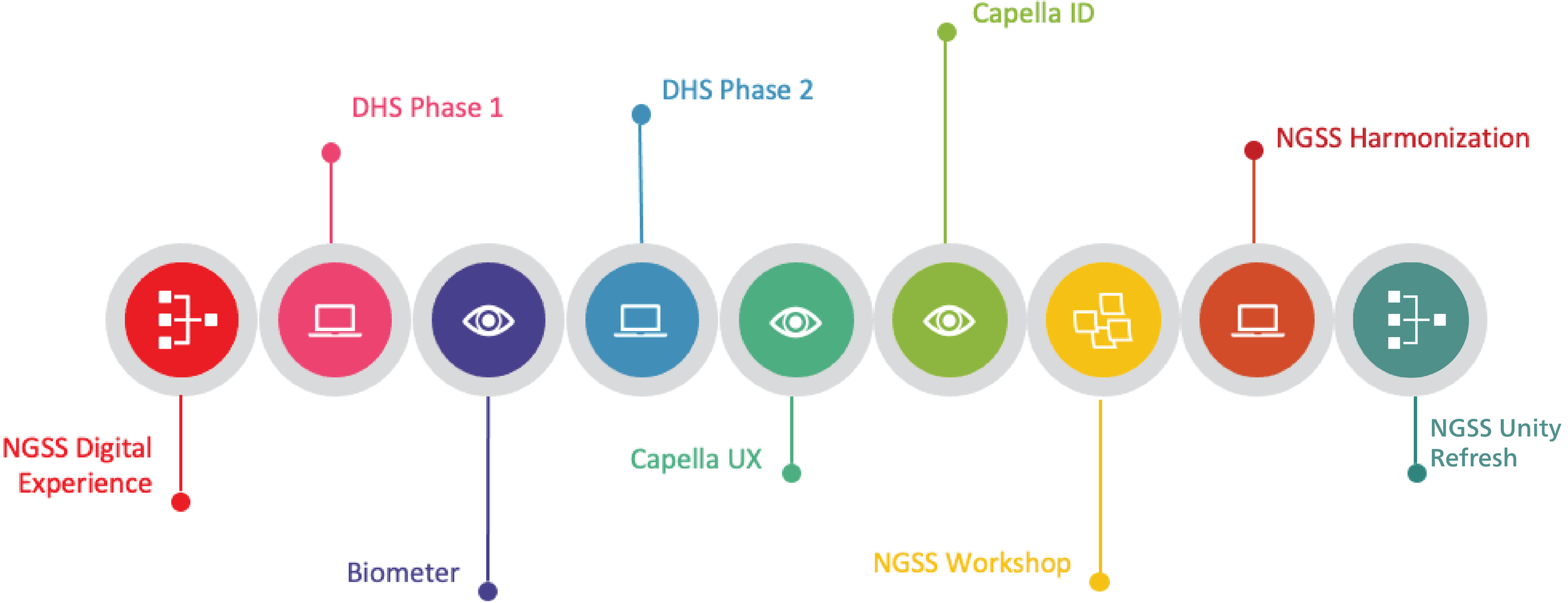
Overview of phases and activities in the four-month long NGSS journey refresh I led in 2022, five years after the original vision was created.
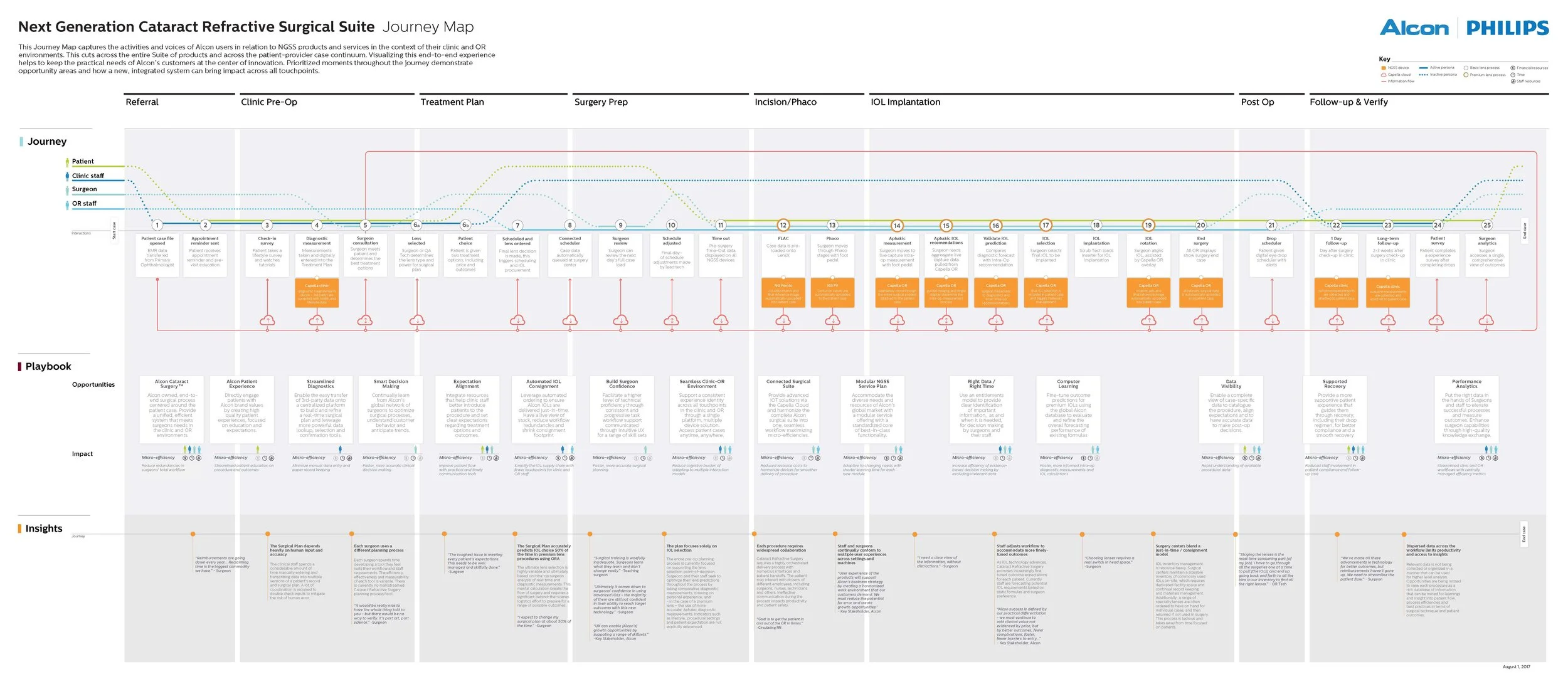
The "original" 2017 NGSS ecosystem map served as a North Star vision for Alcon, and guided subsequent device and application development across the surgical suite.
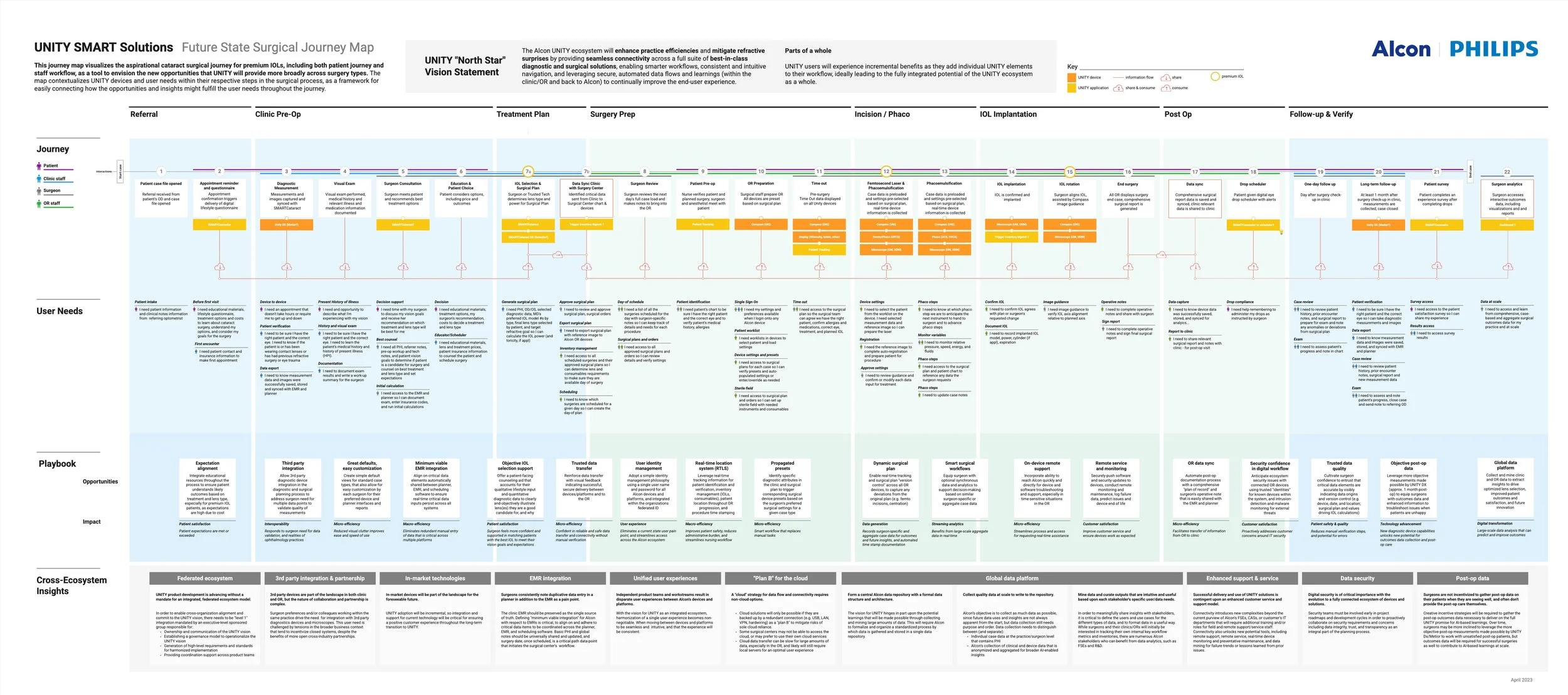
After reviewing the current state, an updated Future State journey was built off of updated user requirements, data, and clinical needs to guide product development teams.
How we sequenced what matters:
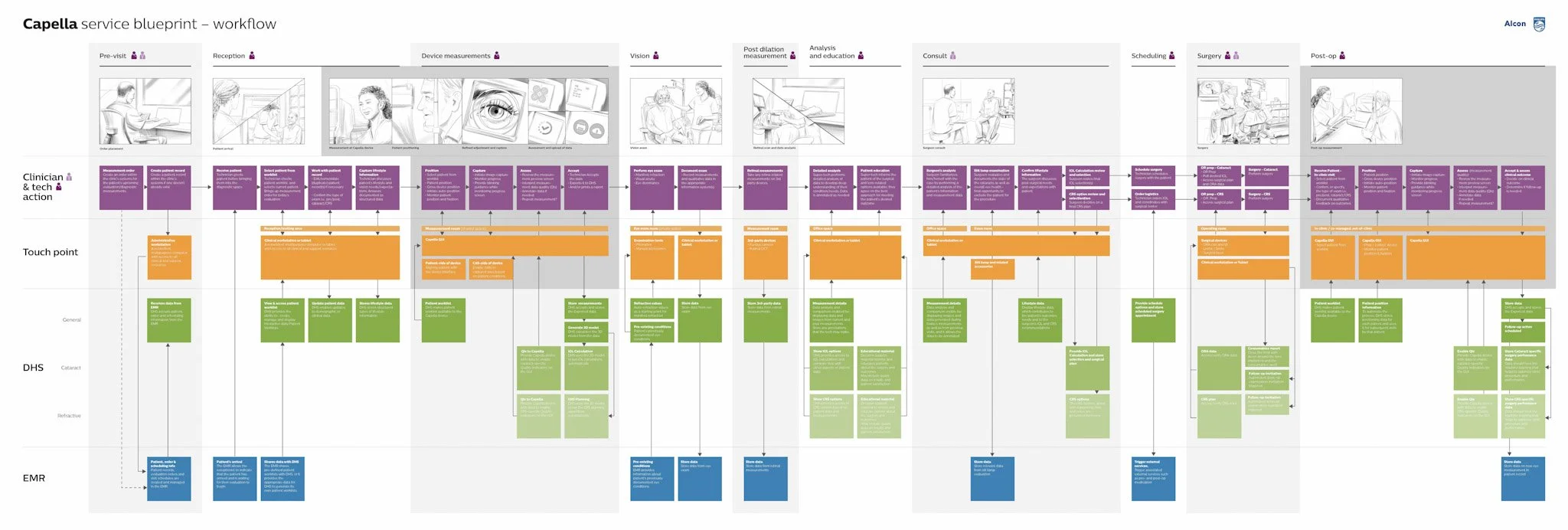
In a related project for a new diagnostic measurement device, a service blueprint mapped out the E2E workflow across clinic and surgery care settings, identifying data connections and integrations needed with other elements in the ecosystem.
Alcon needed a way to roadmap a multi-year program that wasn't a feature list. We discovered there wasn’t alignment internally around what “connectivity” meant.
In a workshop with their Clinical Application Specialists, my team built one: three Connectivity Horizons, moving from basic device connectivity, to surgeon-centric insight, to closed-loop optimization where outcomes refined future surgical parameters. It gave product teams across the ecosystem a shared way to argue about sequence and priority in terms of what the experience should become, rather than what the spec sheet said.
“Mark wasn’t the kind of manager who disappeared into meetings. He is out with customers, digging into research, working through design challenges and asking the kinds of questions that helped us see problems differently.”
— Deanna A., Design lead, Philips
Connectivity Horizons
Artifact gallery
A sampling of some of the activities and artifacts created along the way during the project. Close collaboration and coordination was required across multiple teams.
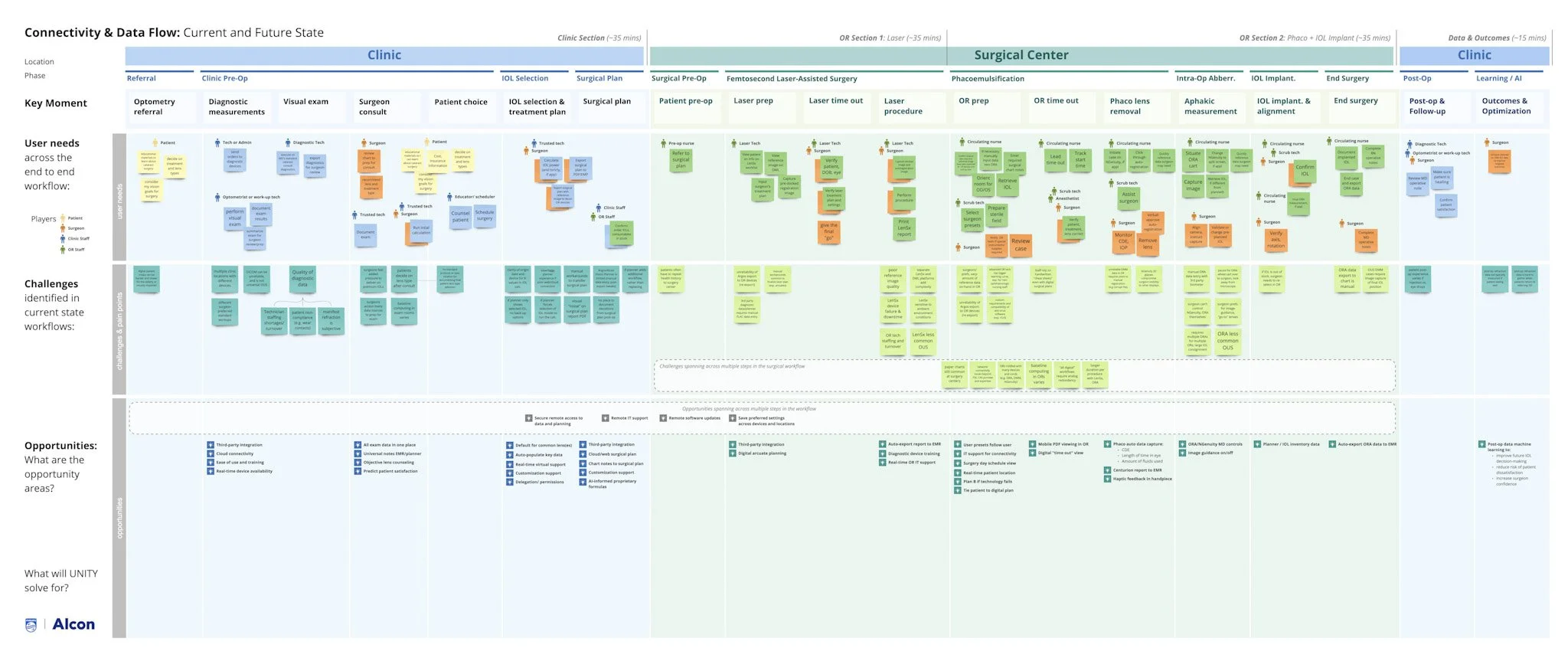
Input from worksessions with Clinical Application Specialists were synthesized to include in future state maps.
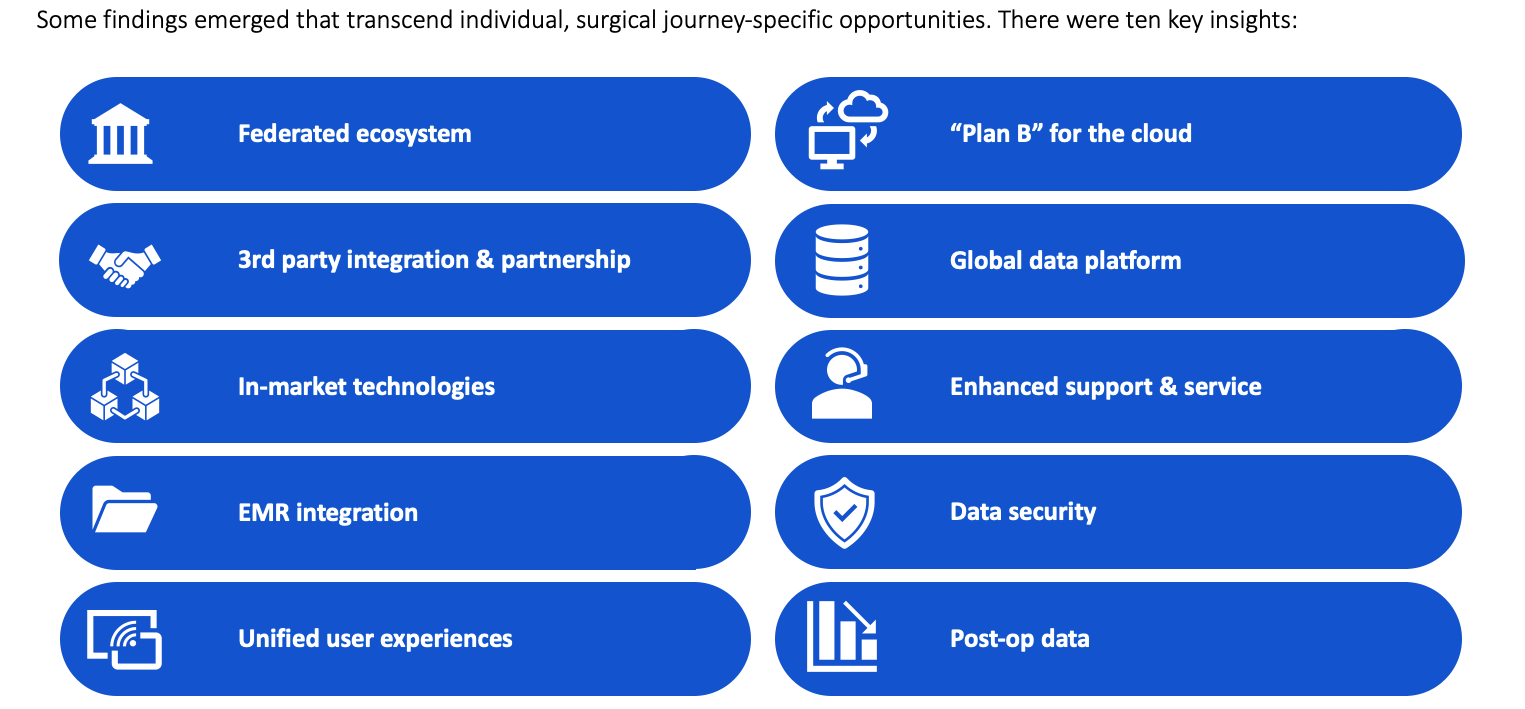
Emergent themes from user research were used to influence leadership decision making.
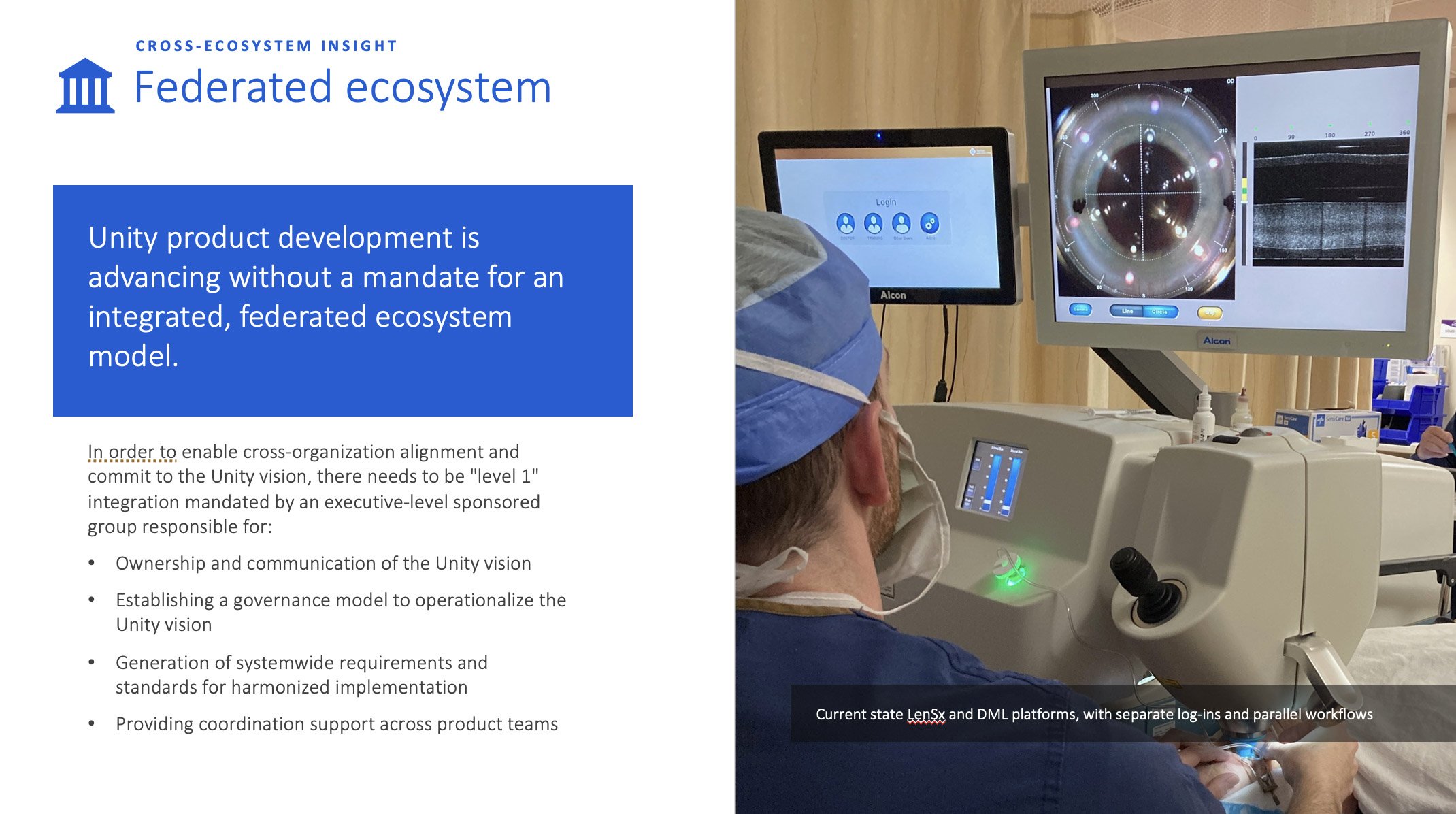
Example insight and recommendation.
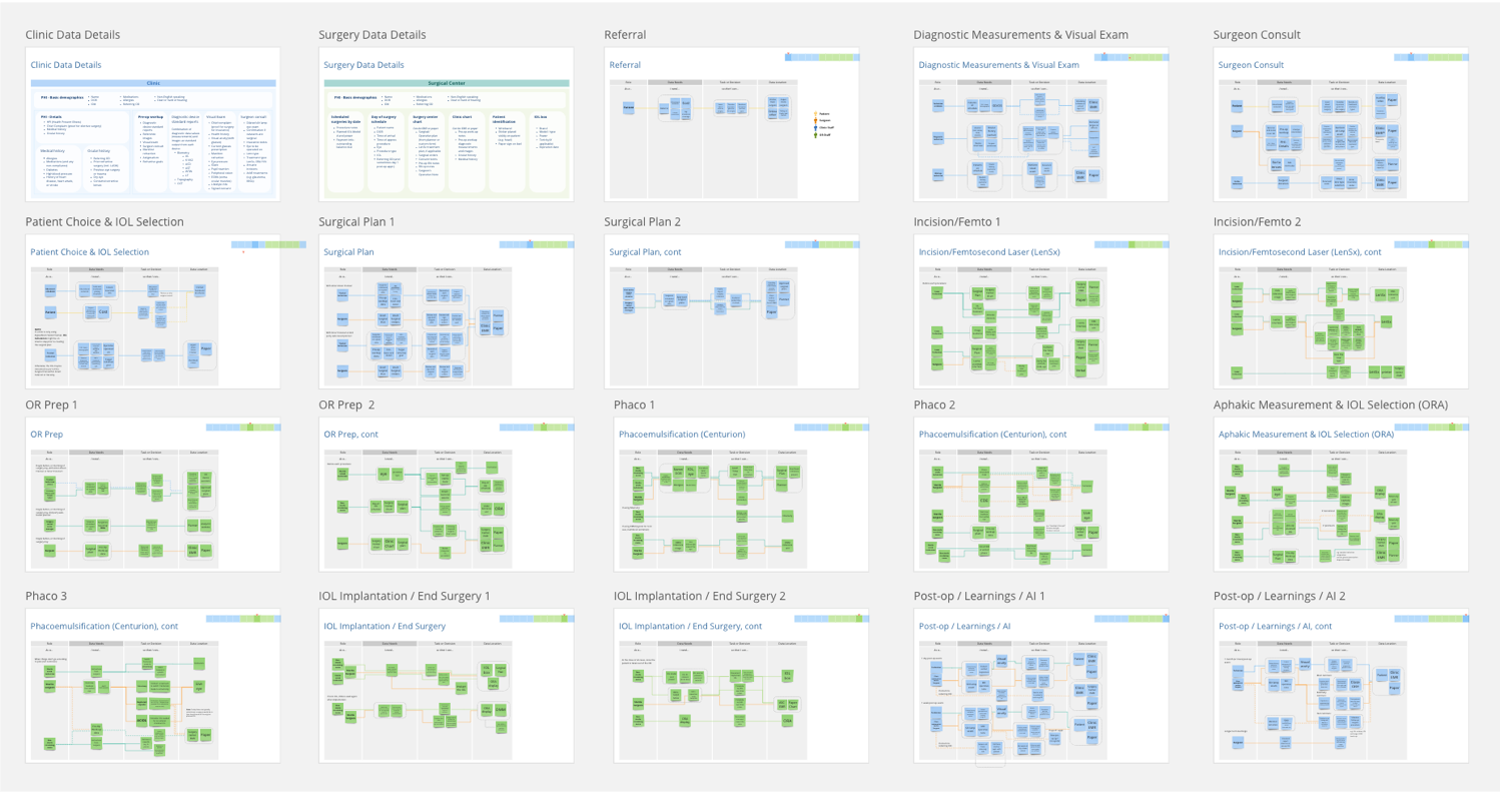
Jobs-to-be-done and user requirements were aggregated across touchpoints.
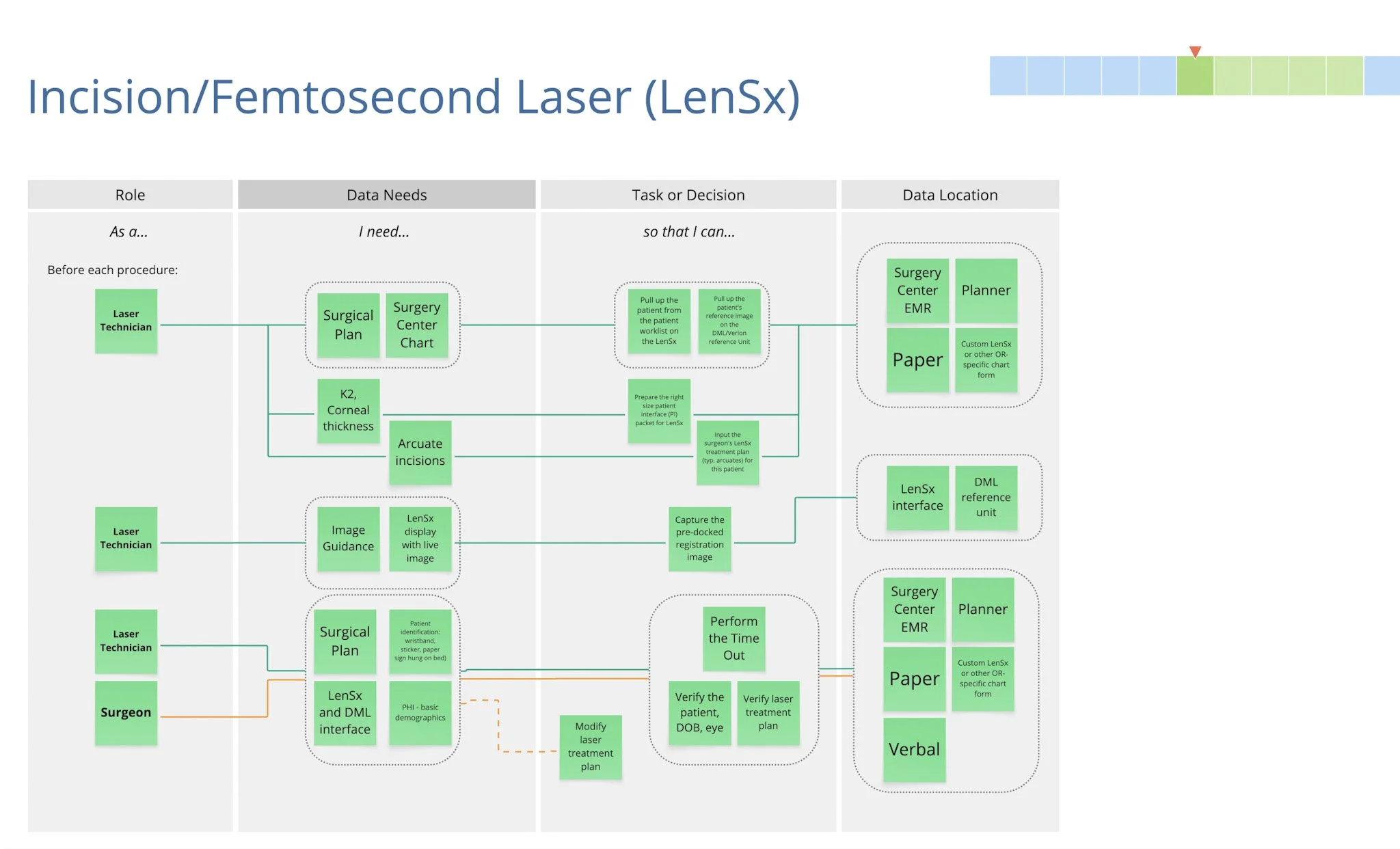
Example of user/data needs mapping.

A deep dive into devices, services, and data flows ensured appropriate connectivity levels across the federated ecosystem.
What the work produced
A north star vision & roadmap:
The 2017 ecosystem map became a North Star that guided device and application development across Alcon's surgical suite for the next five plus years. A map like that either gets filed or gets used. This one got used.
A deeper, broader relationship:
The program grew into a multi-year consulting relationship of more than $2M across eight projects. It strengthened the Philips and Alcon cloud services partnership, brought the Philips global design function into the work across six disciplines and five locations, de-risked a first-of-kind diagnostic device, and harmonized the design language across the ecosystem.
Increased efficiencies:
Two of the eight projects focused on Alcon's cloud planning application. In 2023, an independent time-and-motion study published in Clinical Ophthalmology measured that platform against traditional manual methods.
13.2
Minutes saved in procedures with the connected platform vs traditional methods
184
Manual transcription points eliminated per complex cataract patient
A scalable design language:
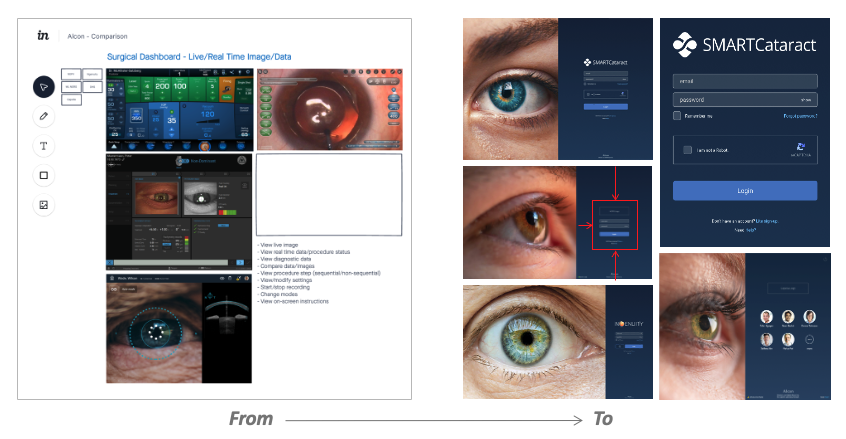
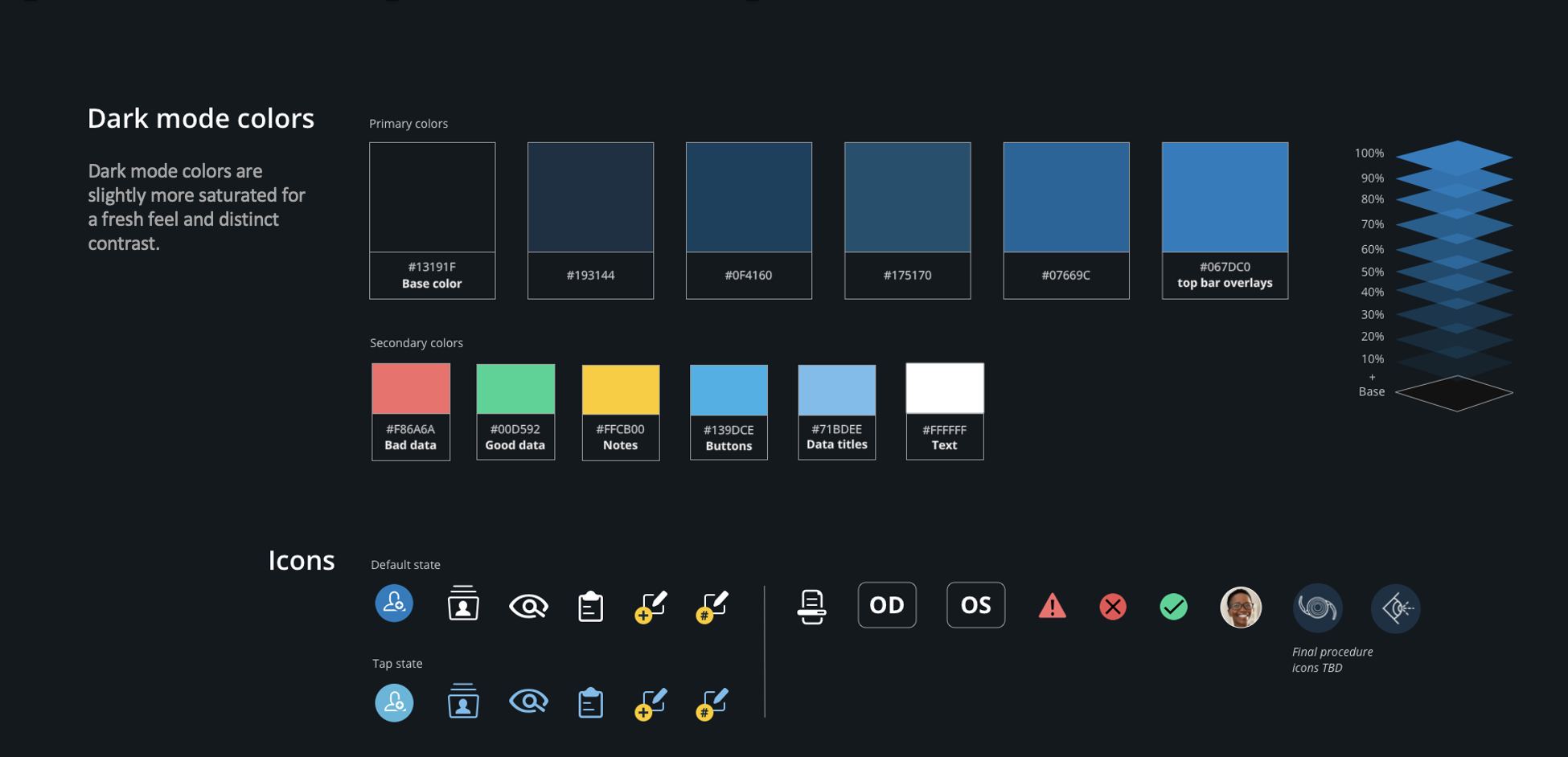
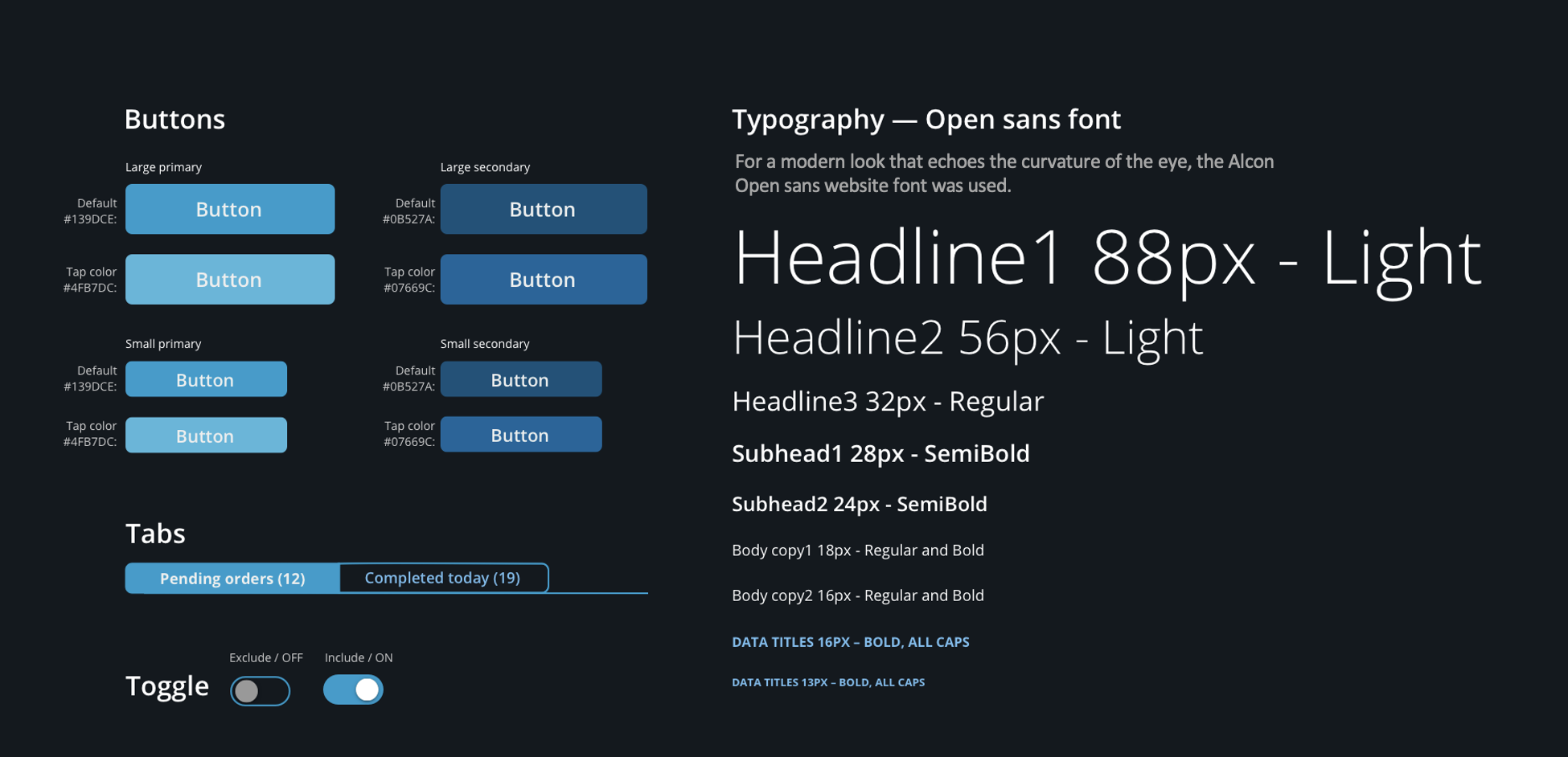
Following the NGSS refresh, a Design Language System project formalized what the journey work had made visible: translating experience principles into consistent UI standards, interaction patterns, and brand expression across the full Alcon device and software ecosystem. Where the journey maps defined what the experience should feel like for surgeons and clinical staff, the DLS defined how every interface element would express it. Together they gave Alcon's global product teams a shared design language that could scale across hardware and software, clinic and operating room.