
Fred Hutch Cancer Care Journey
Cancer care is a series of defining moments, starting from diagnosis.
How might we inspire confidence and hope from the earliest moments, as patients are just beginning their care journeys?
“They told me I have cancer…now what am I supposed to do?”
Client: Fred Hutch Cancer Center (Seattle Cancer Care Alliance, UW Medicine, and Fred Hutch Cancer Research Institute)
Year: 2022/23
Project Type: Service Design & Healthcare Experience Strategy
My role: Project director guiding design team and leading end-to-end engagement across research, journey mapping, co-design workshops, and experience strategy. Project transpired during the integration of three major cancer care organizations.
Untangling the care journey
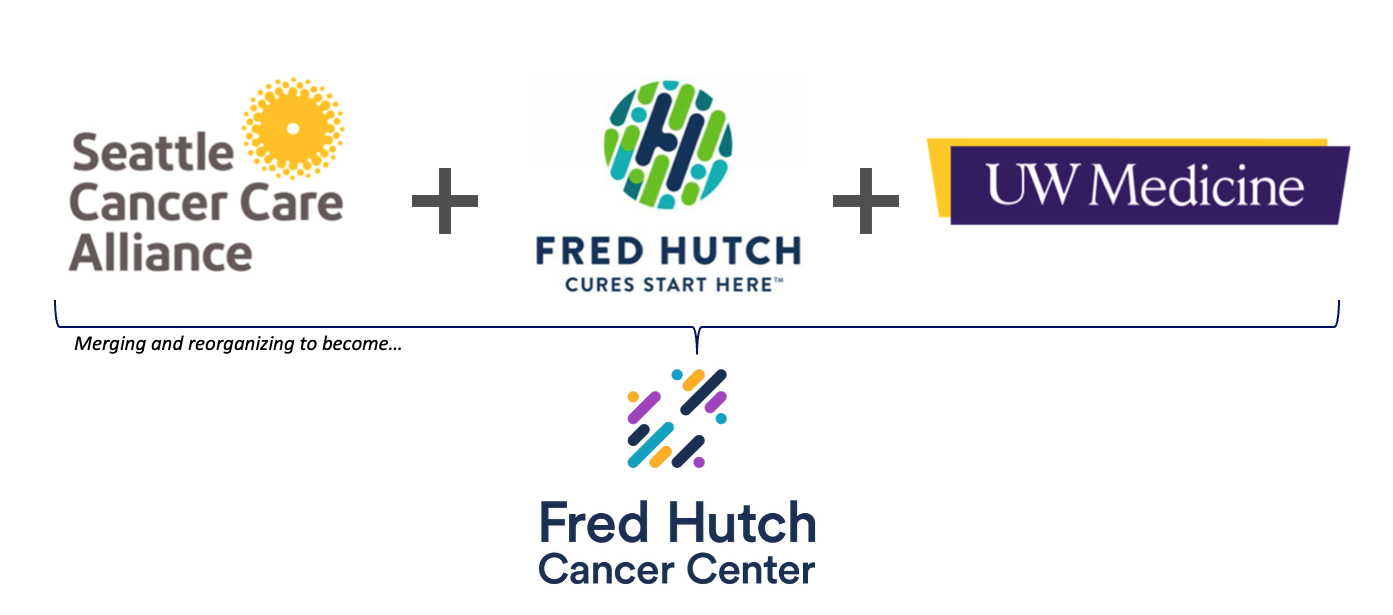
Three of the Pacific Northwest's leading cancer care organizations — Seattle Cancer Care Alliance, UW Medicine, and Fred Hutch Cancer Research Institute – were merging into a single unified system. Patients starting care or moving between institutions encountered fragmented communication, inconsistent care pathways, and unclear points of contact from the moment of diagnosis forward.
The organization's ambition was to become a Top 5 national cancer center and engaged Philips to help. Getting there required a deeper understanding of what patients and clinicians were actually experiencing. So we set out to work with the Fred Hutch team to work through the organizational resources, processes, and assets that would enable patients to get high-quality care and the information they need in a timely and convenient manner.
The Approach
We ran an extensive discovery and design research to fully understand the current state across sites, disease types, and organization differences. Activities included observational research across multiple sites, quantitative data spanning 2019-2021, and four tumor-type cohorts mapped separately because the access experience varied significantly by type.
With initial insights in-hand, three co-design workshops brought together more than 60 stakeholders — clinical staff, administrators, and patients from all three organizations — to pressure-test findings and generate improvement ideas against what was already underway internally. Six key themes emerged, each with prioritized initiatives, action plans, and measurable KPIs.
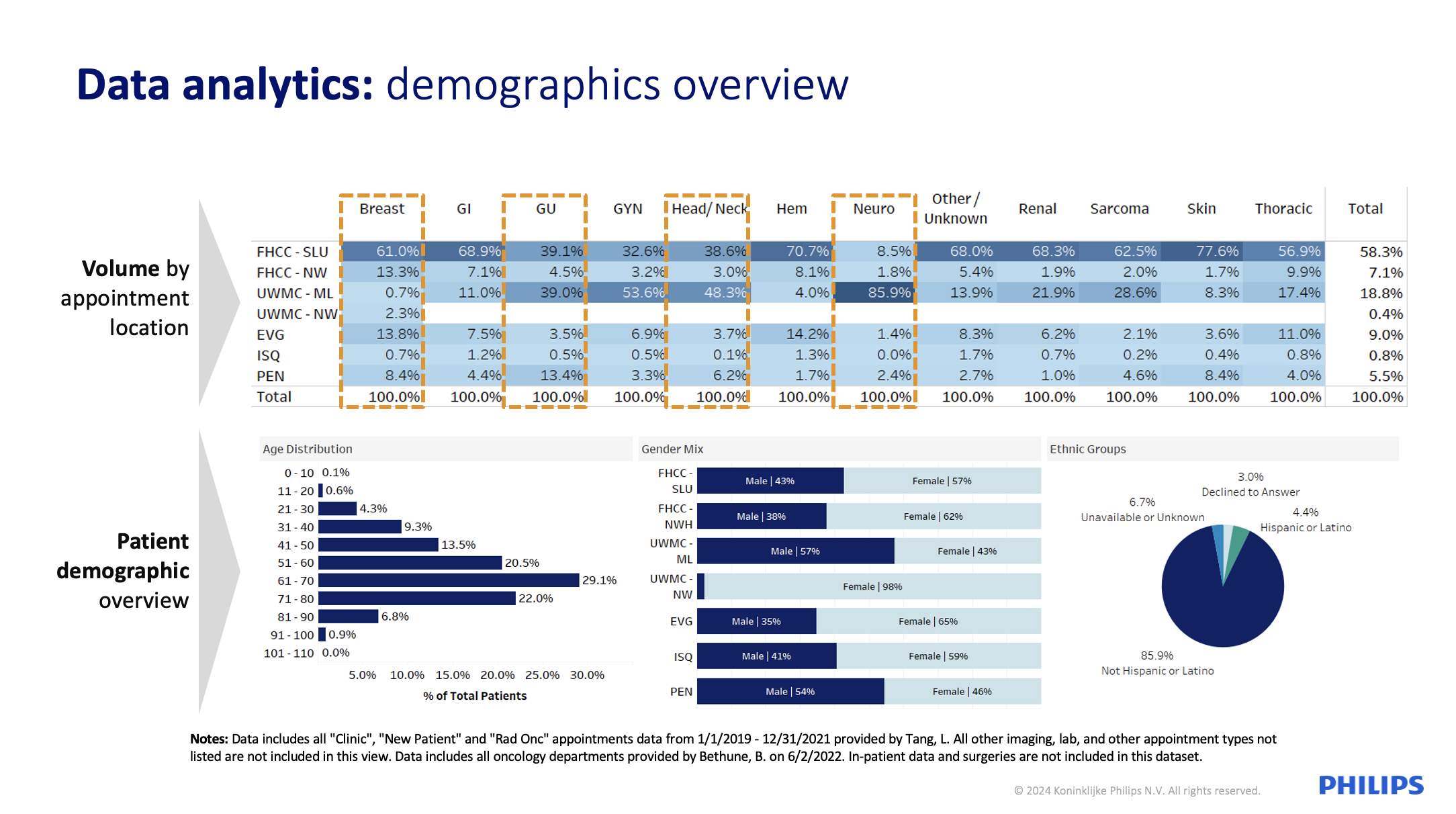
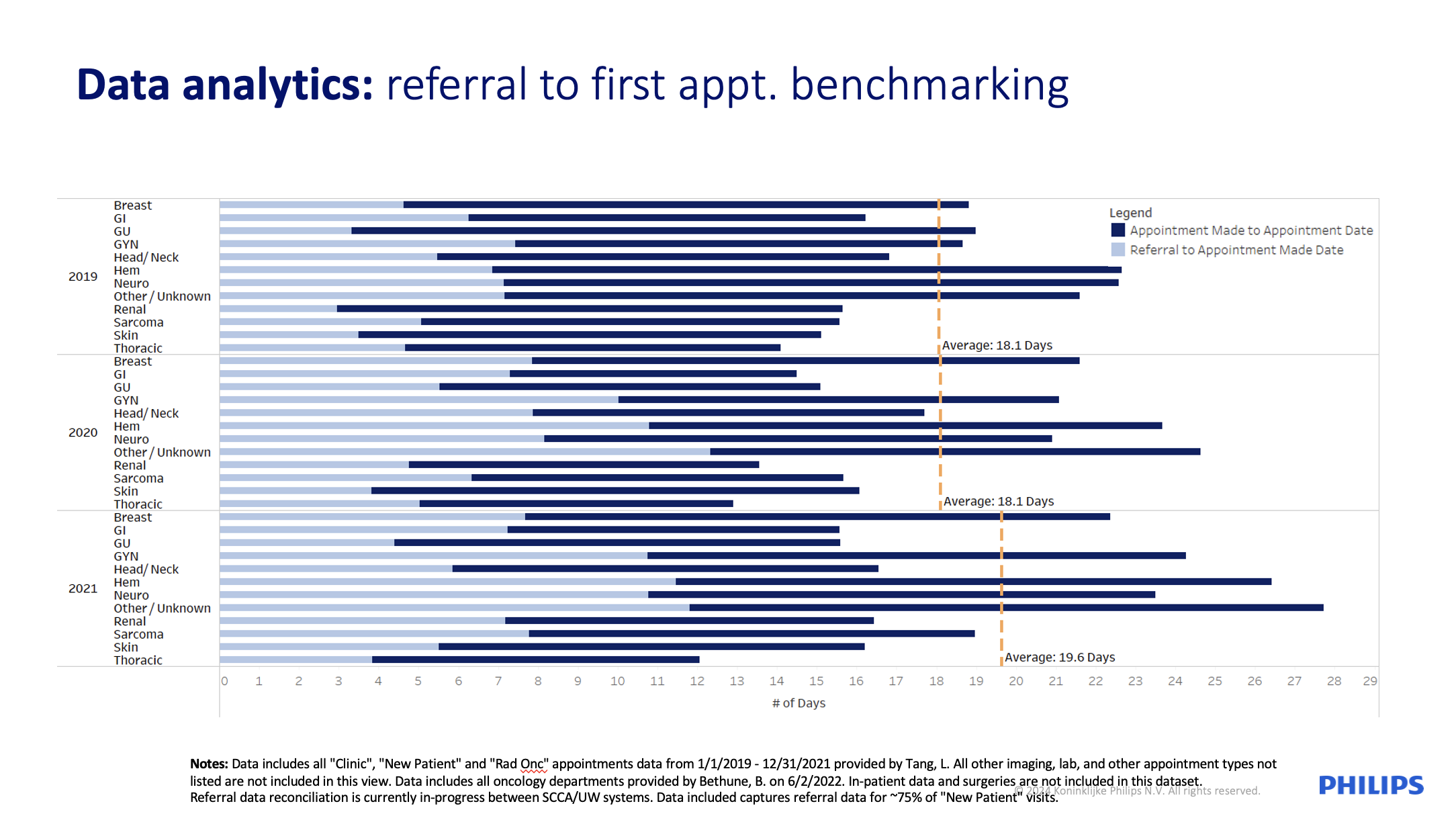
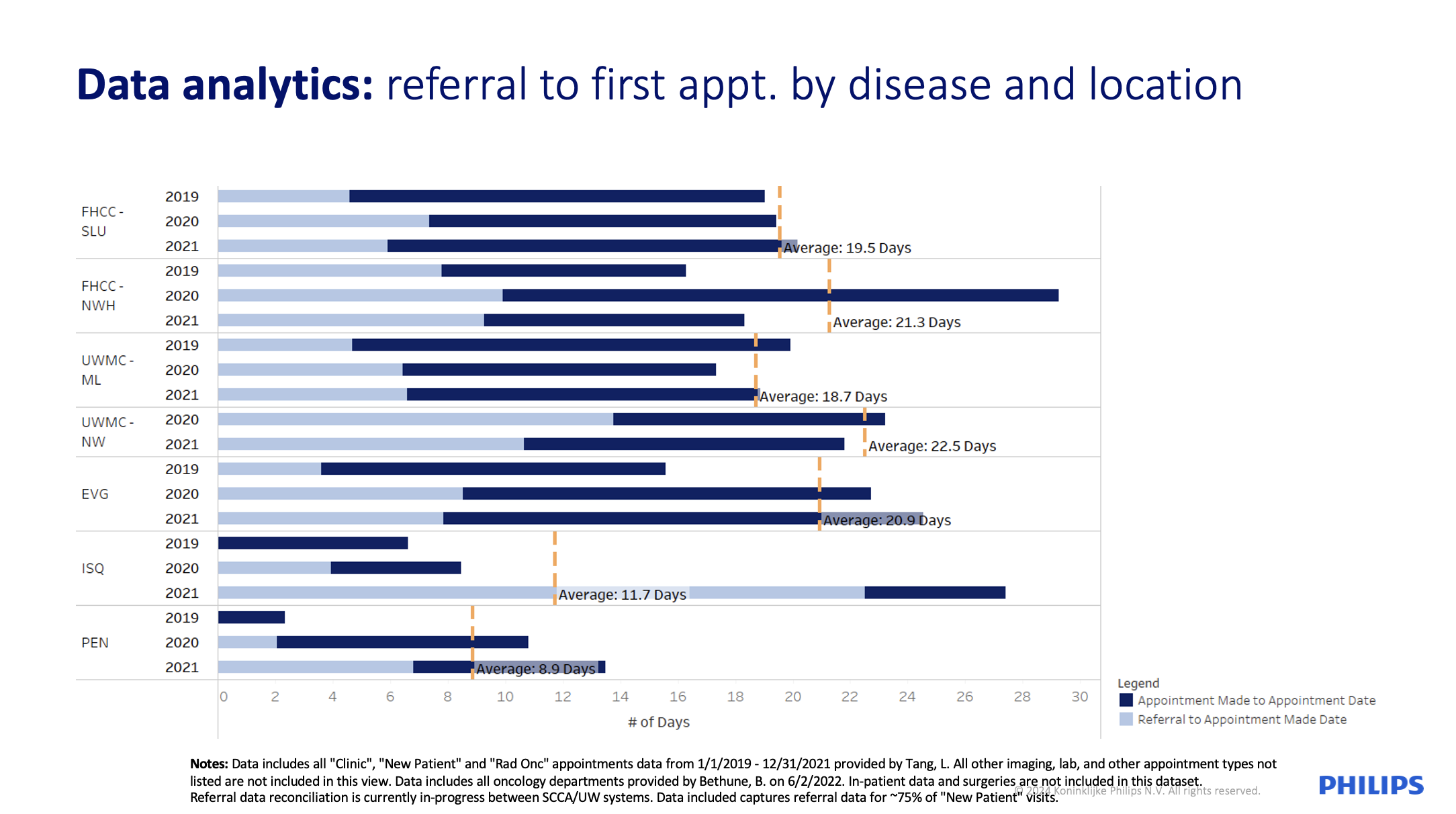
Quantitative data analysis conducted during discovery phase indicated many key benchmarks were trending the wrong way.
Six improvement themes emerged from the research and guided ideation.
Qualitative design research tasks conducted
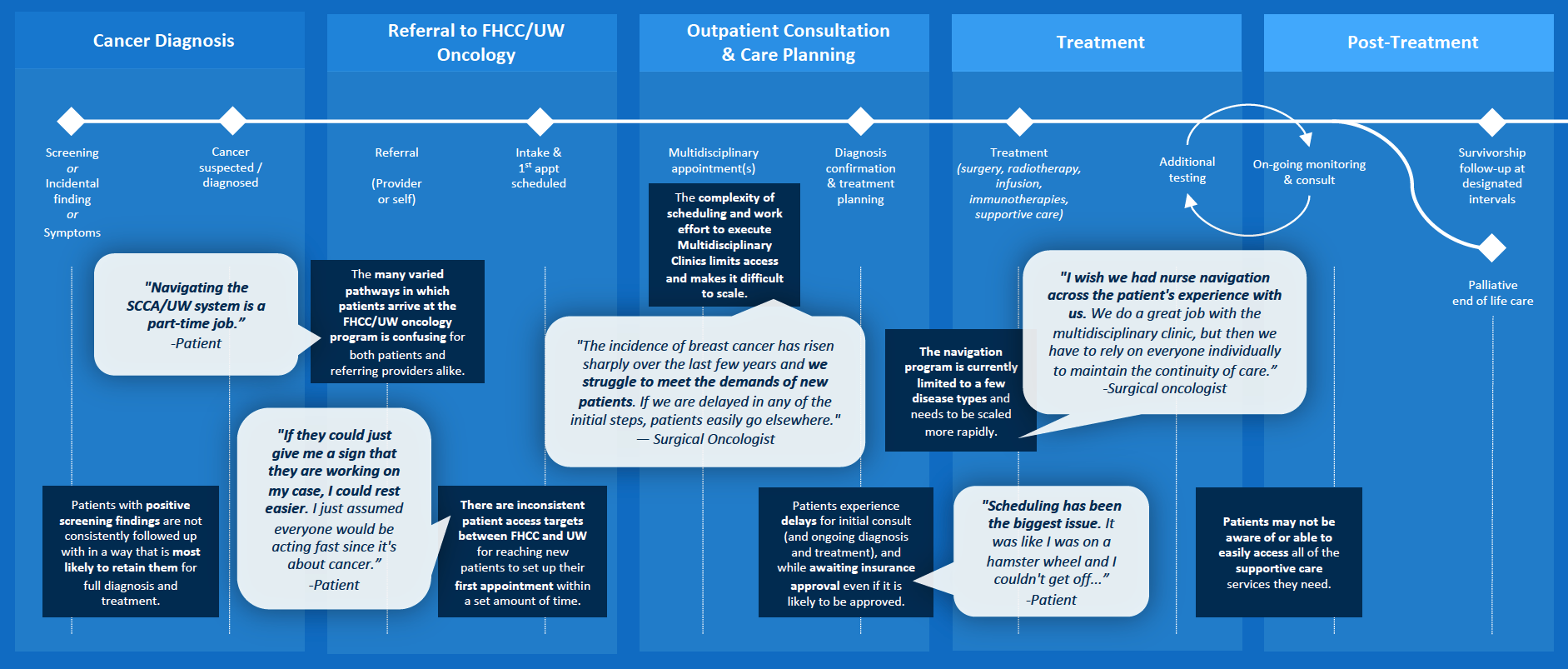
Initial summary journey and patient/staff experience quotes
Current state patient journeys were developed and compared for four different cancer types.
Future state journey maps summarized experience goals, KPI’s and external benchmark references.
Concepts and opportunities generated by 3 groups across 6 key research themes.
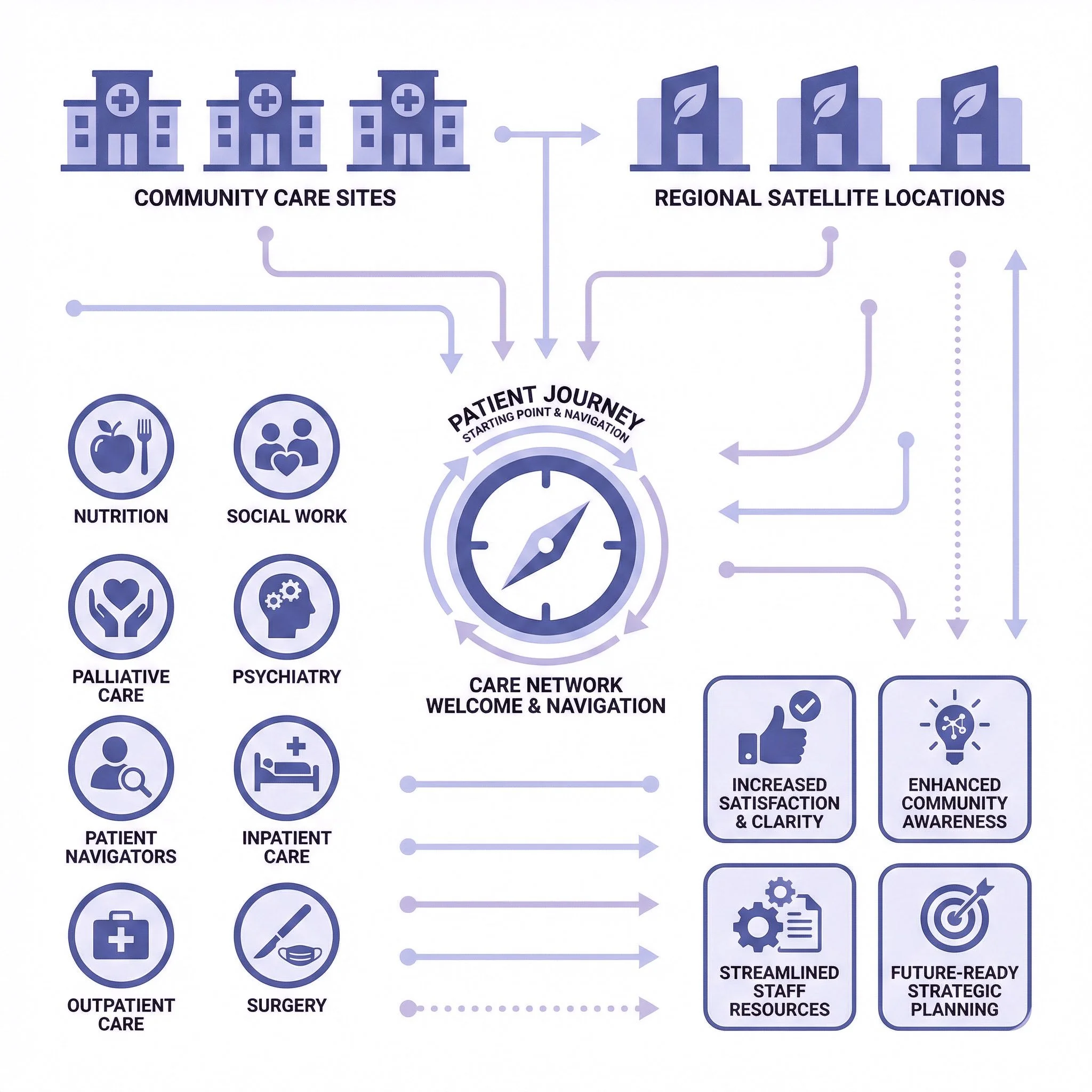
Gen AI summary diagrams indicating new user-flows, tool, and process initiatives.
Co-creating initiatives
All three organizations, including clinical and operational staff, patients, and administrators were brought together to generate a diverse set of ideas as well as identify current improvement initiatives already underway.
Synthesized initiatives were mapped and prioritized by effort & impact.
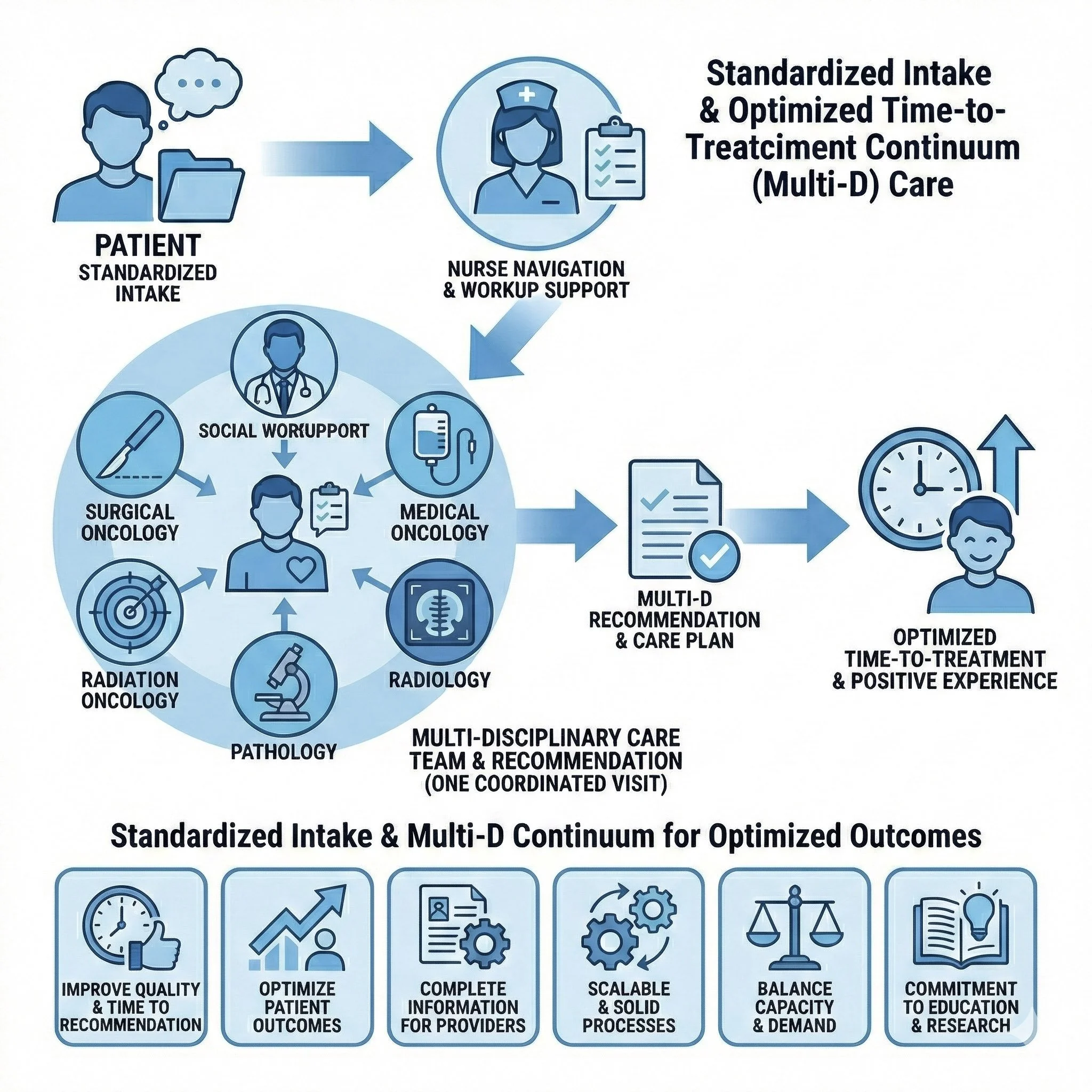
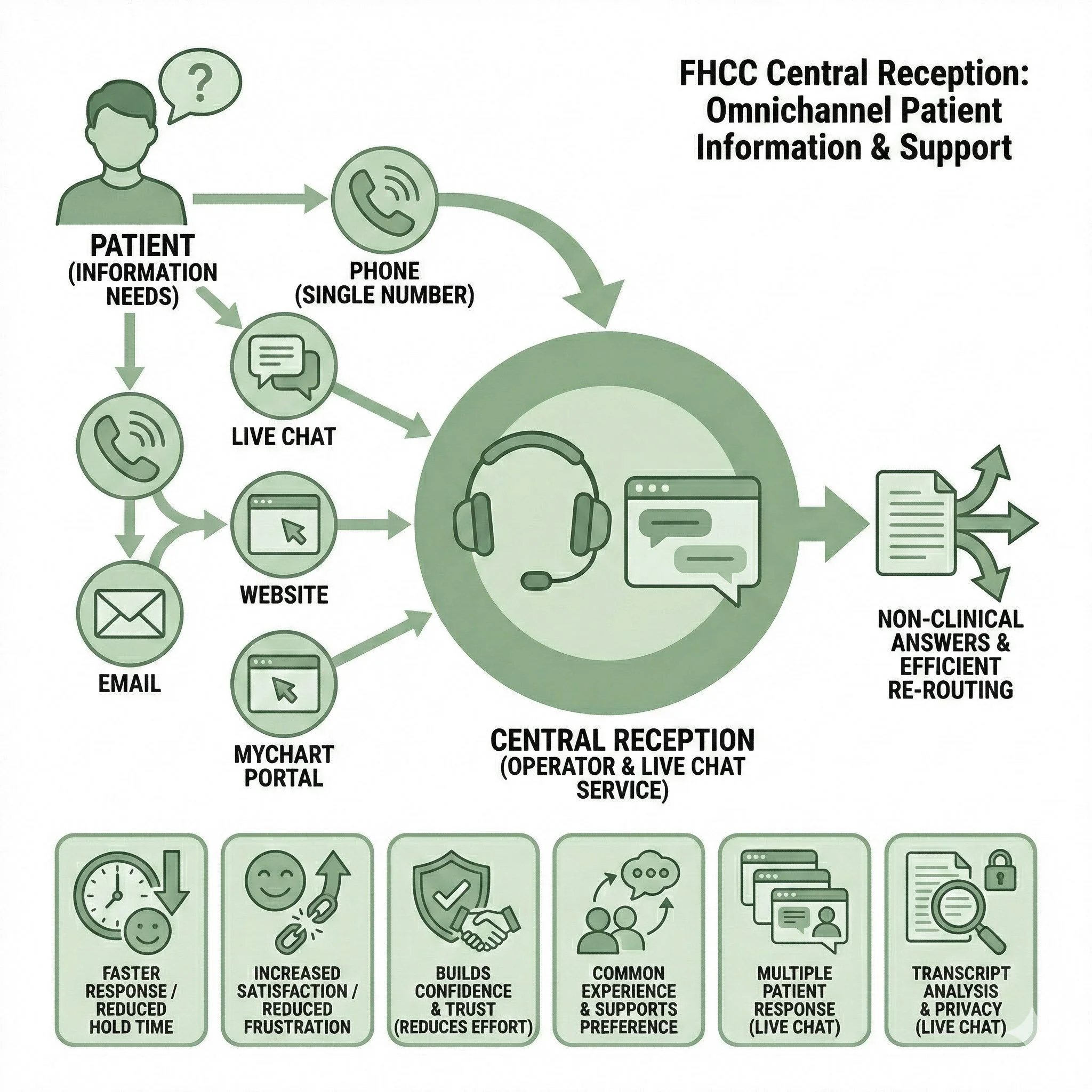
What Changed
Since completing the project, 75-80% of the improvement areas we identified were adopted and implemented by internal teams or agency partners; a number I take seriously as a true measure of service design impact. The most visible changes: patients now receive initial contact within one day of referral, compared to up to two weeks before the engagement.
Additional improvements include a major overhaul of their web presence, a single phone number for requesting care, a system-wide location map, and expanded access to a dedicated Nurse Navigator for every new patient, providing a consistent point of contact through the complexity of a first diagnosis and beyond.
Selected downtream implementations by Fred Hutch teams.