
Improving access to cancer care
“They told me I have cancer…now what am I supposed to do?”
Fred Hutch Cancer Center
Client: Seattle Cancer Care Alliance, UW Medicine, and Fred Hutch Cancer Research (2022)
Project Type: Service Design & Experience Strategy
Overview:
During the integration of three cancer care organizations, FHCC engaged our team to assess patient access across the full care journey. Navigating complex stakeholder dynamics, the project identified common themes, priorities, and improvement strategies to create a more consistent experience and advance FHCC’s aspiration to become a Top 5 national cancer center.
Responsibilities:
Project director and creative oversight
Shaping and conducting user-research and experience strategy
Executive and core-team presentations
Resourcing and project management
Deliverables and design reviews

Cancer care is a series of defining moments, starting from diagnosis.
How might we inspire confidence and hope from the earliest moments, as patients are just beginning their care journeys?
Defining “Patient Access”
Patient access does not just refer to how patients enter the system, but also how patients are handed off throughout their journey, with specific opportunities when those handoffs bridge organizations or physical sites.
We set out to work with the Fred Hutch team to work through the organizational resources, processes, and assets that would enable patients to get high-quality care and the information they need in a timely and convenient manner.
Design research activities
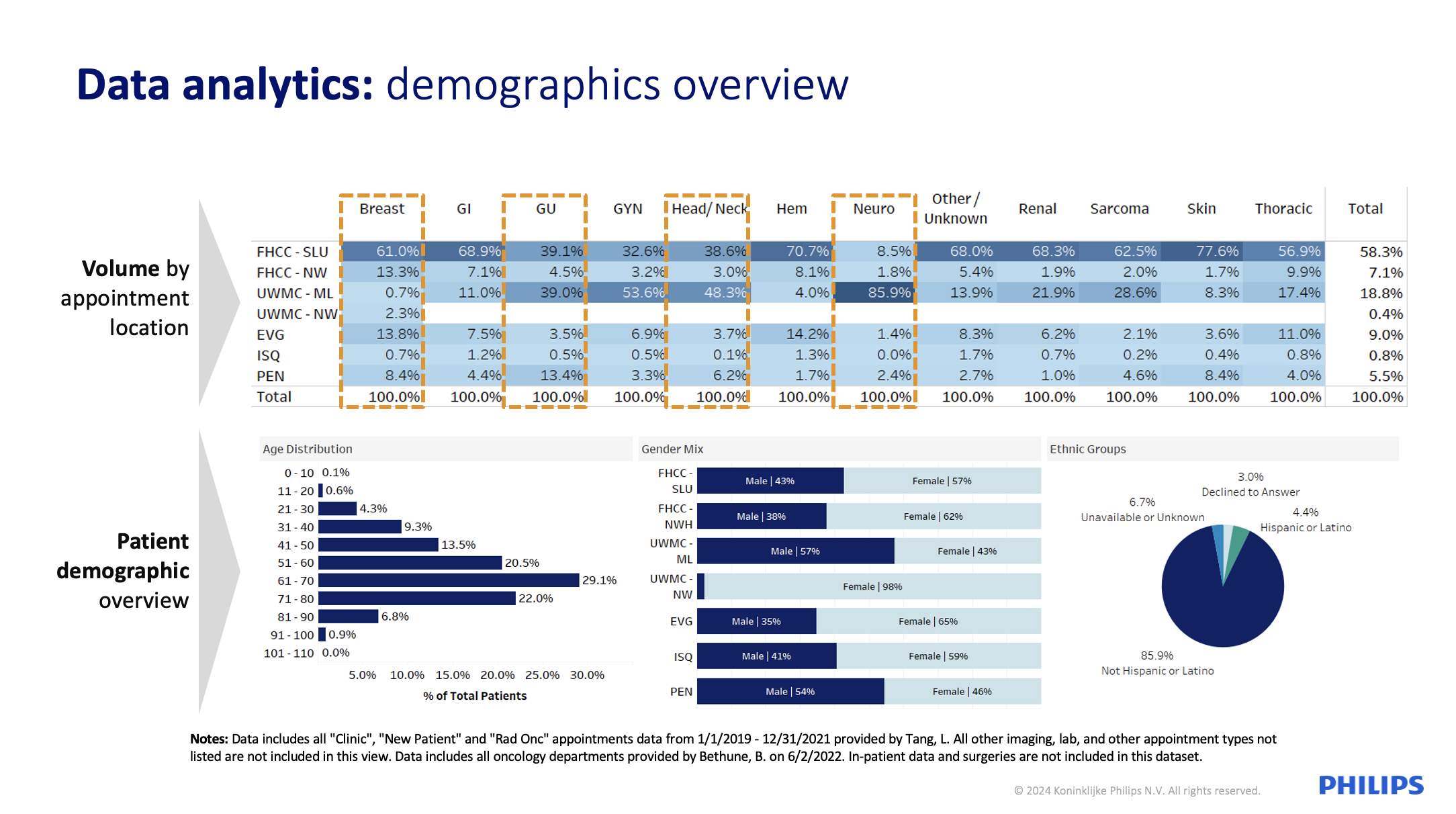
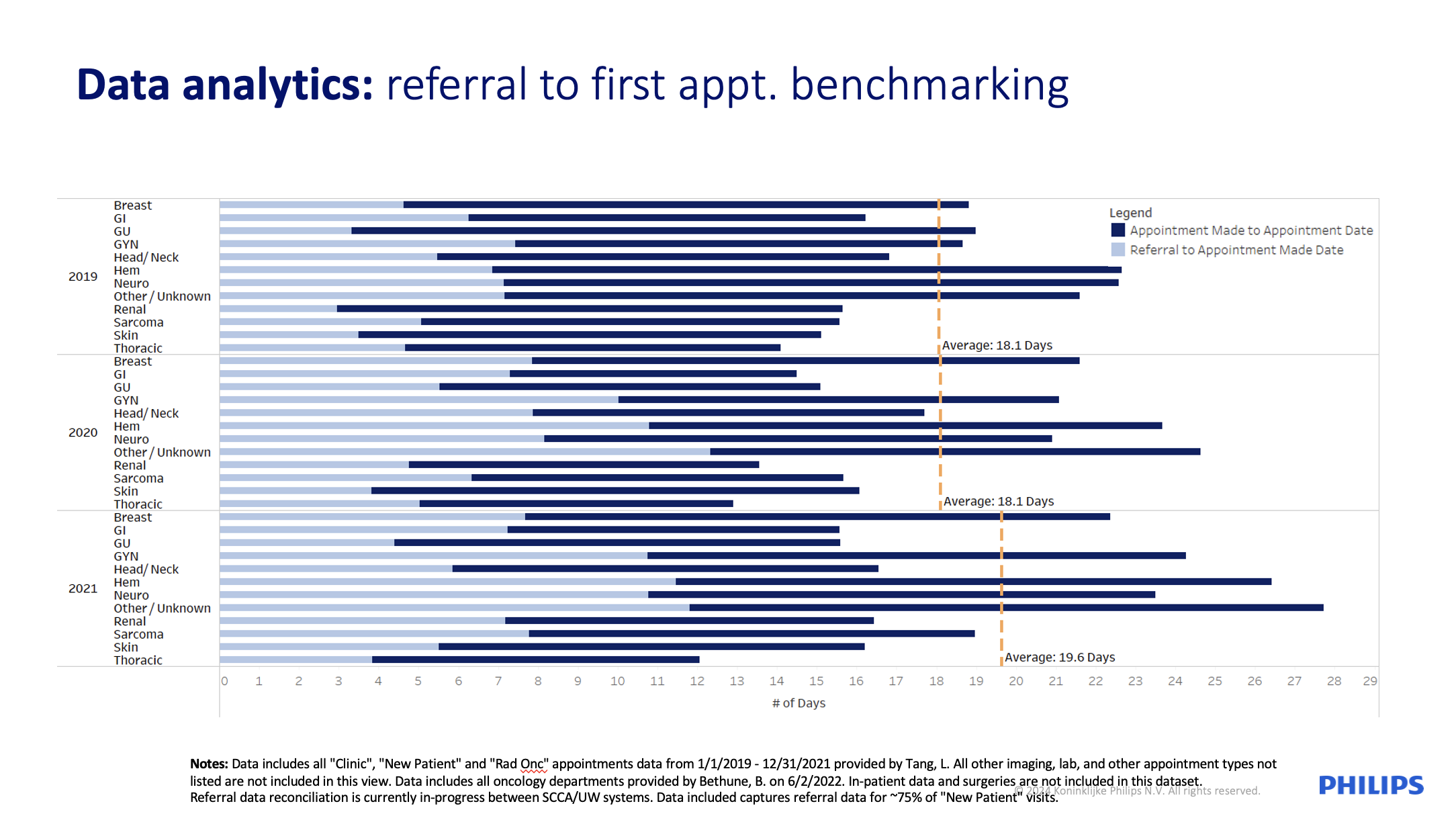
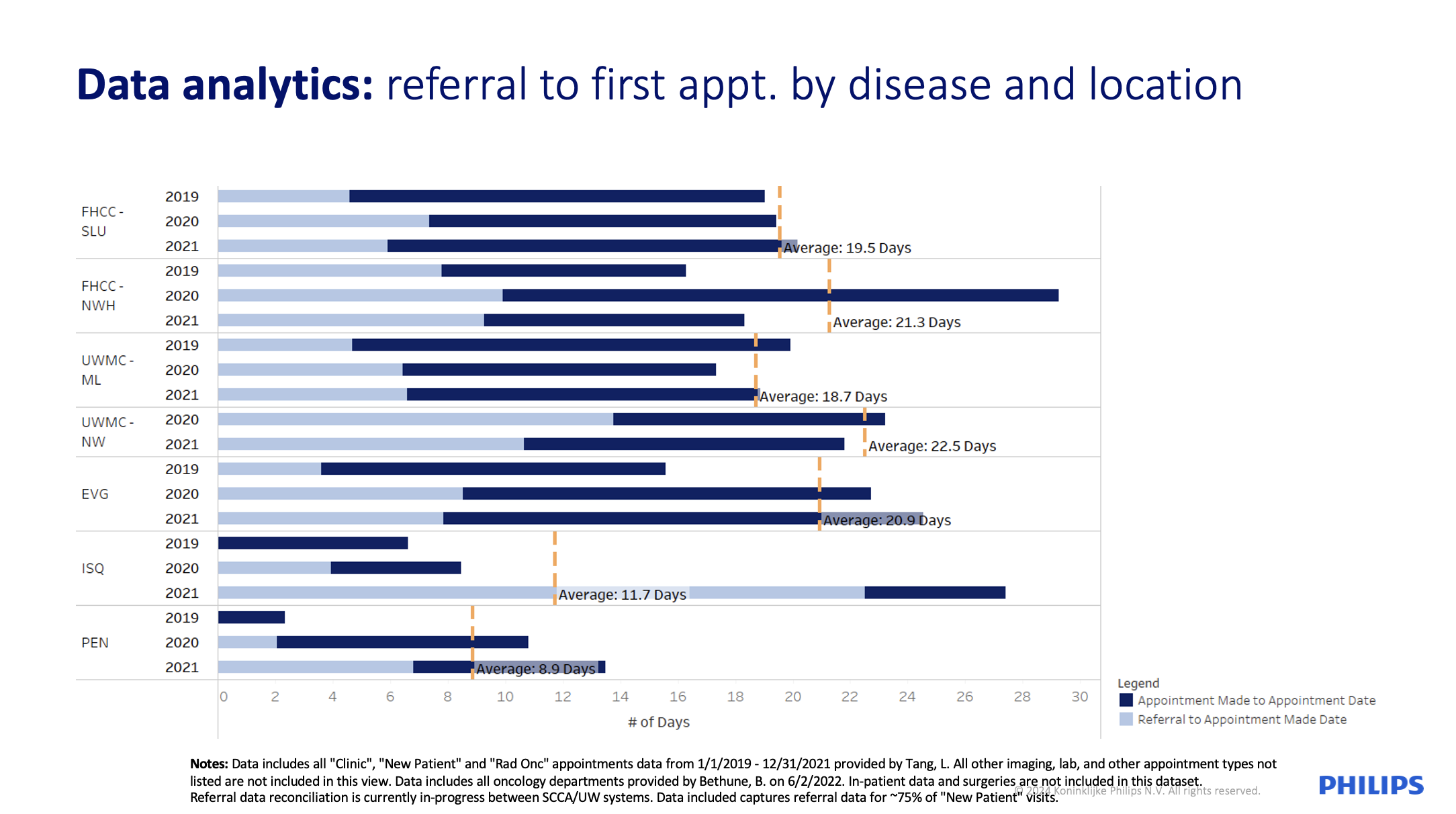
Quantitative data analysis conducted during discovery phase indicated many key benchmarks were trending the wrong way
Qualitative design research tasks conducted during discovery phase
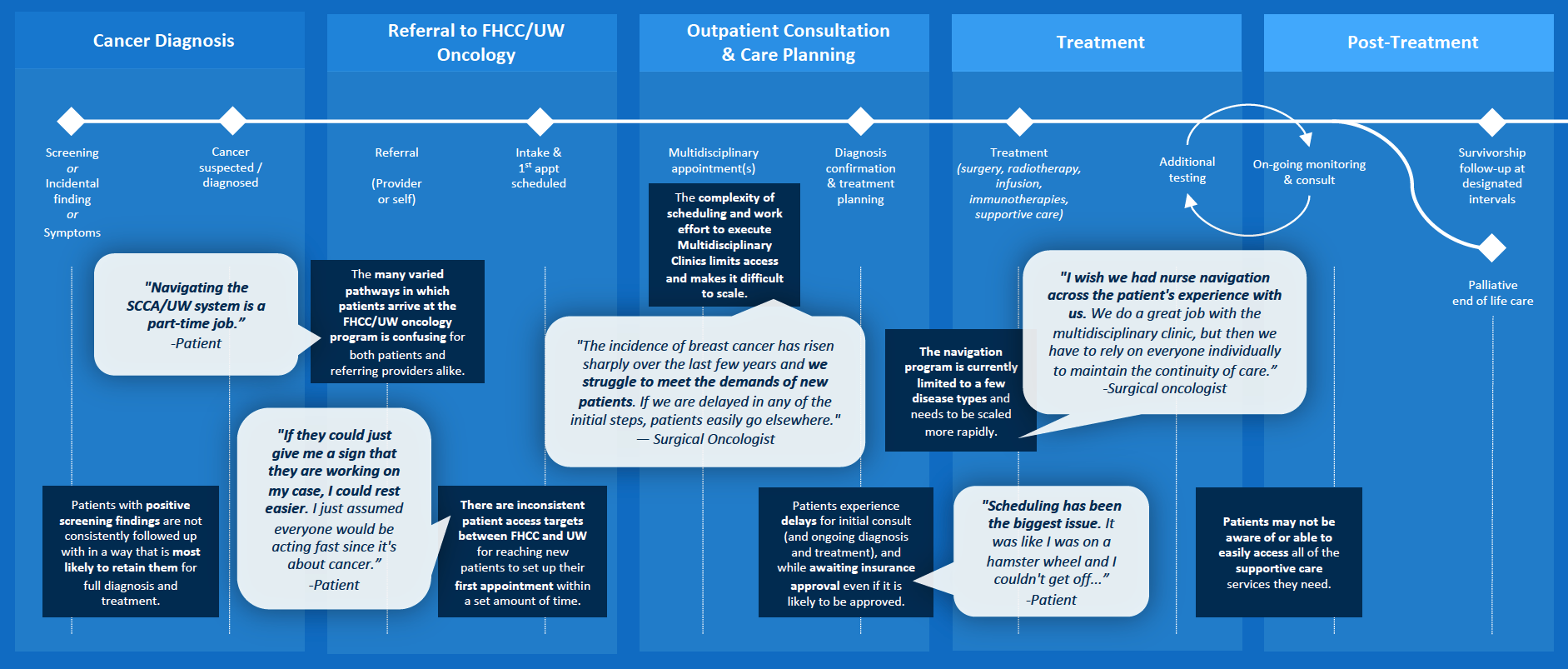
Initial summary journey and patient/staff quotes
Patient journeys were developed and compared for four different cancer types
Concepts and opportunities generated by 3 groups across 6 key themes
Framing the challenge
Six key themes and insights were developed and synthesized from the research. A master current state “map'“ aggregated all the relevant data and was used to springboard ideation and co-create workshops with over 60 people, representing all three organizations, clinical and operational staff, patients, and administrators. Bringing everyone together generated a diverse set of ideas as well as identifying current improvement initiatives already underway.
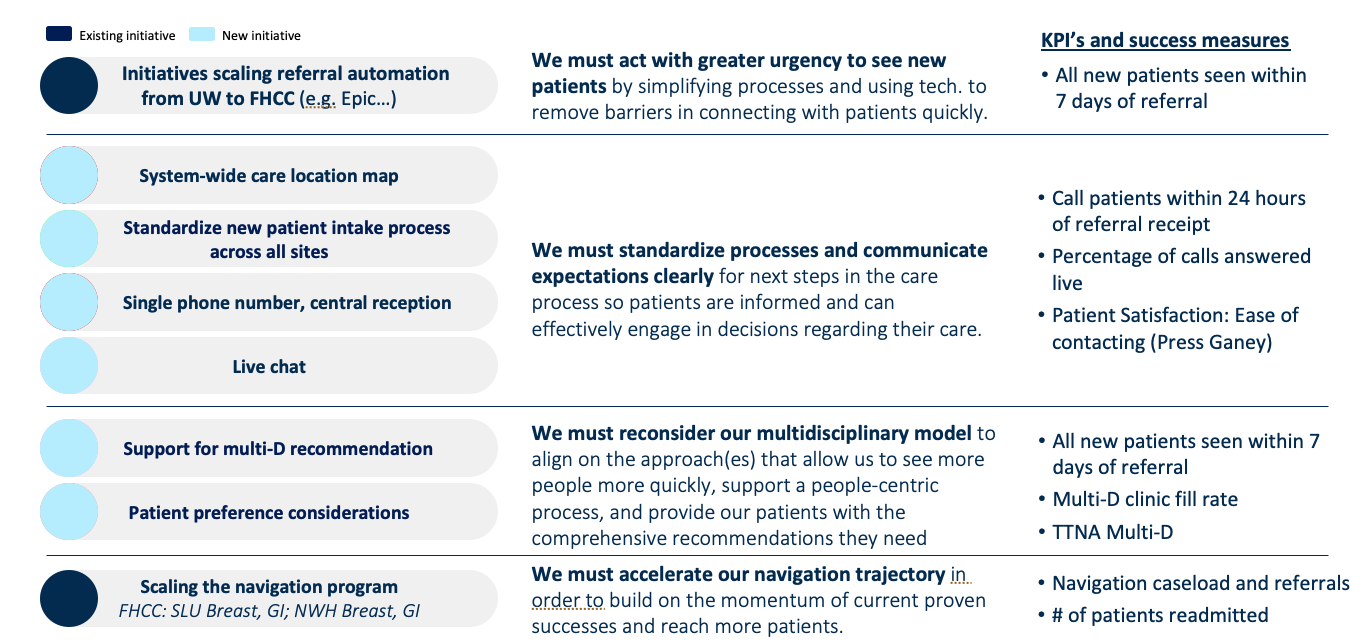
Initiatives aligned to strategic plan and KPI's
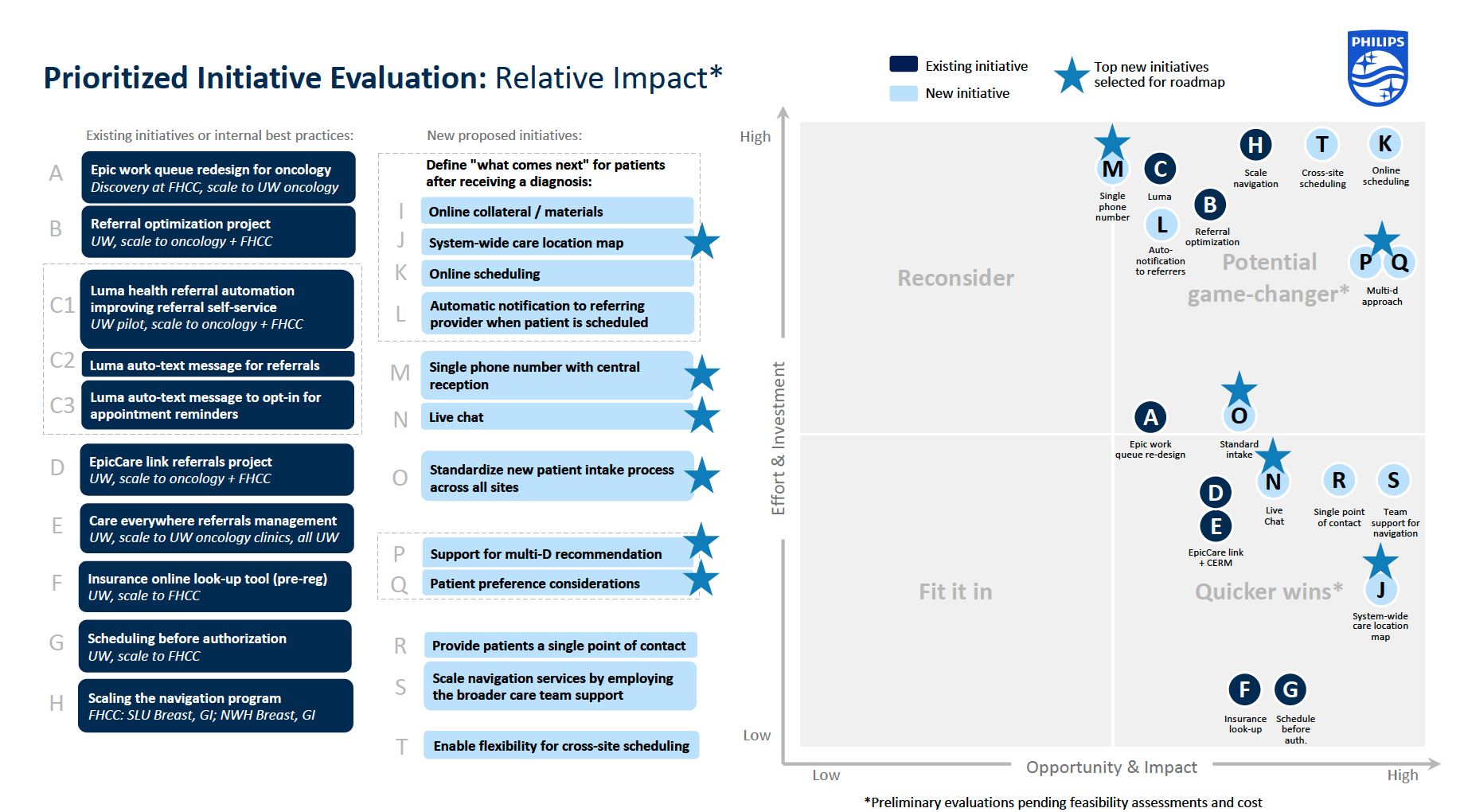
Effort/impact mapping activity of initiatives
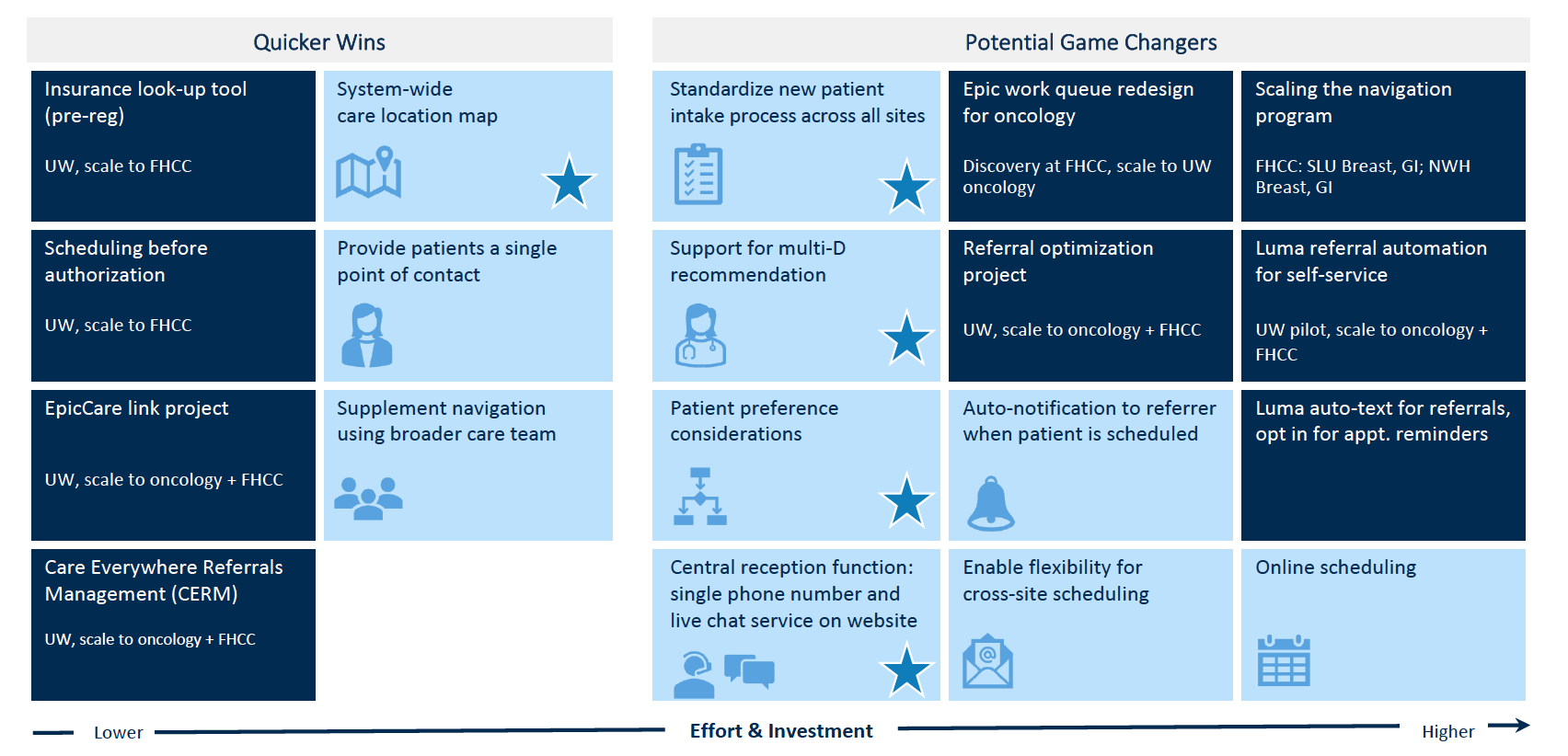
Summary priorities defined for leadership approvals
Outcomes
Several prioritized initiatives have been taken on by internal teams or agency contractors including a major revamp of their web presence, single “number” for requesting care, system wide location map, and expanded nurse navigator program.
Patients now generally receive contact within one day (versus up to 2 weeks!) of referral and an appointment within about two days - reversing the trend our initial study showed significantly.